The challenge
The University of California, Irvine is a top-ranked public research university known for innovation, academic excellence, and an exceptional student experience. But their virtual tour told a different story. Originally developed during the pandemic, it showed just a sliver of the academic breadth and ambition present at UCI, and wasn’t helping the Admissions team reach its enrollment goals.
Their previous platform forced a number of tradeoffs. Content had to be trimmed to just 20 to 25 stops to fit what the system could handle, making the tour a one-size-fits-all experience that couldn’t answer the many questions students have about campus. The format was an either/or choice between 360 scenes or a walking tour experience. As the team’s content list grew, their tour couldn’t accommodate it. Lead data had to be manually downloaded and imported into their CRM on a regular basis, a task easily missed.
Scalability was the deeper concern. UCI needed a platform that could grow with the university, adding tours, expanding content, and supporting new use cases over time, without hitting a ceiling.
The solution
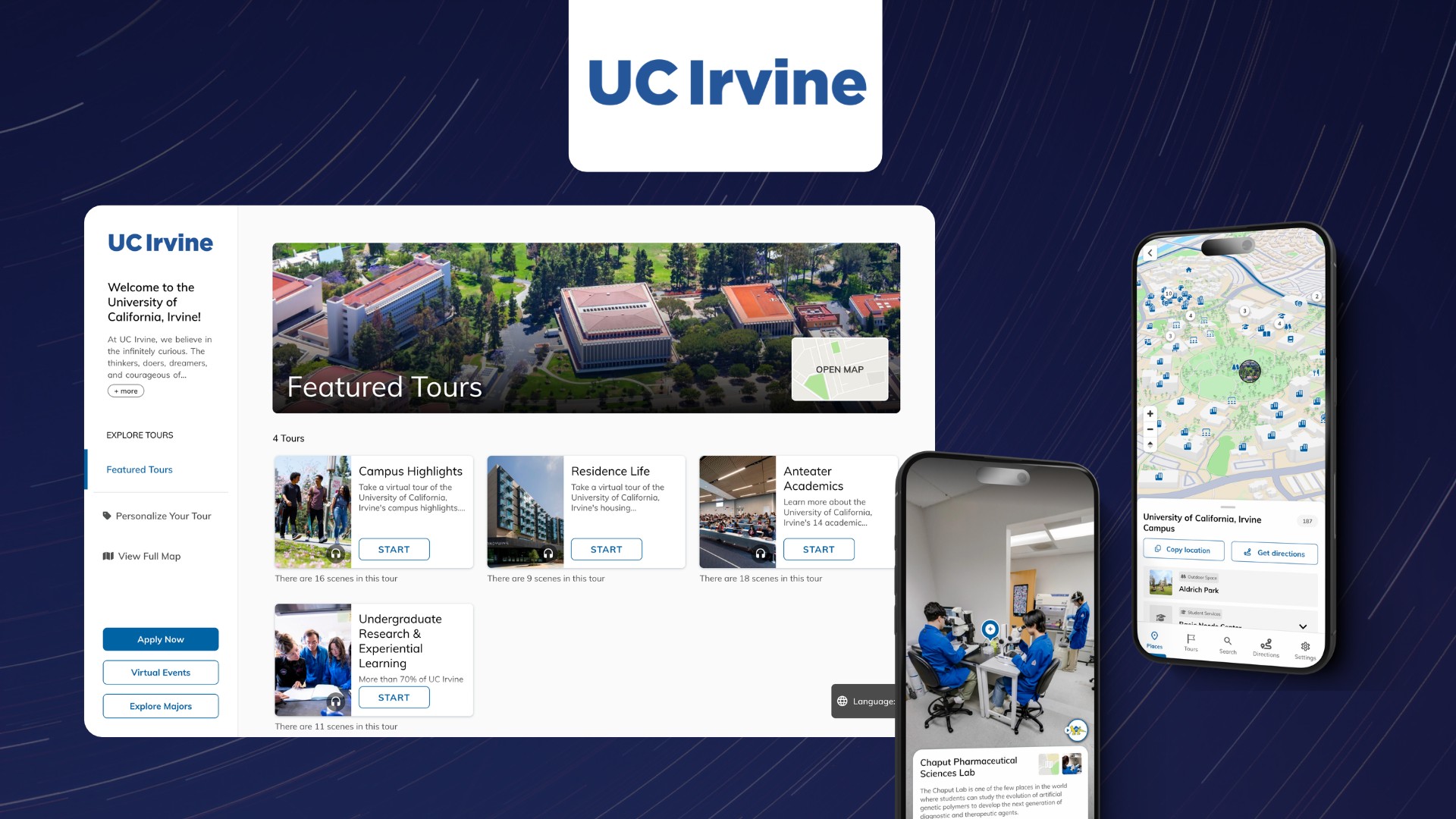
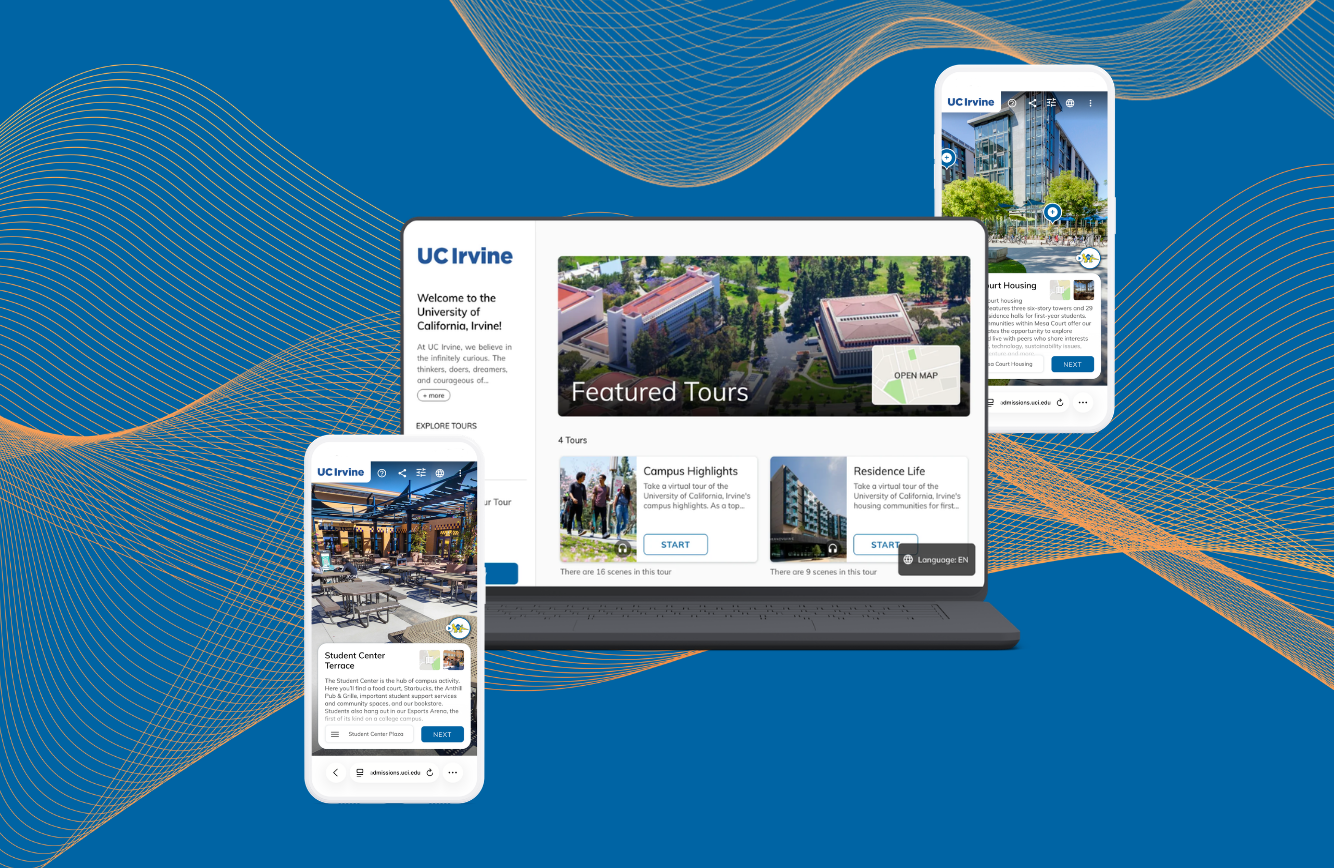
After evaluating alternatives, UCI chose Circuit, led their own content capture across campus and launched in July 2025. What was once a single static tour became a unified experience: multiple tours that showcased Campus Life and Experiential Learning, an interactive campus map with walking, cycling, and driving directions, and a self-guided tour powered by the campus highlights tour stops, all managed within one platform.
Their RFI form went live in August, when the application cycle opened. It integrated directly with Slate, eliminating the manual import process entirely. UCI could now see and respond to new tour inquiries the moment they came in.
To maximize reach, the team placed Circuit’s Embed Banners on key pages across their site, including their parent portal, so students and supporters could discover the tour right where they were already browsing. Calls to Action (CTAs) appear during the tour and at individual stops, creating a continuous path from exploration to inquiry to application.

The results
Higher-quality leads
First-source inquiries captured through Circuit’s RFI form converted to applicants at 82%, well above the 49% rate UCI’s previous provider had generated. The apply-to-admit rate was similar for both (36% and 35%), which shows the advantage comes from the quality of intent at the inquiry stage.
From inquiry to applicant to admitted to committed, Circuit-sourced leads moved through each stage of UCI's funnel, producing a 21.4% admit-to-commit rate among first-year students by the May 1 SIR deadline.
Reaching future applicants
More than half of all RFI form submissions since launch came from future cycles, mostly current high school juniors and sophomores. UCI is building relationships with these students now, well before they apply.
Why it worked
UCI replaced a tour that sat apart from the enrollment funnel with one built into it. Inquiry forms, Slate, and calls to action live inside the experience, so interest becomes an inquiry at the moment a student is engaged, and the inquiry reaches UCI’s team immediately instead of waiting for a quarterly import.
Combining 360 scenes, maps, and self-guided tours in one platform also meant UCI no longer had to choose between formats, so the tour could answer more of the questions students bring to it. With the tour now part of their recruitment workflow, UCI can keep adding tours and content for future Anteaters, cycle after cycle.